
Engineering
Building exceptional systems that help organizations, products, and communities thrive.
Engineering has shaped the way I see the world. While my career has taken me through transportation, aerospace manufacturing, product development, quality systems, nonprofits, and community leadership, one thing has remained constant: I’m fascinated by understanding how complex systems work—and how they can work better. Today, I apply engineering thinking beyond traditional engineering projects to help improve organizations, products, processes, and the experiences of the people they serve.
Integrated Engineering
When I started college, I didn’t have a lifelong dream of becoming an engineer. In fact, I wasn’t entirely sure what engineering was. I simply knew I loved math, enjoyed solving difficult problems, and found myself excited by course names like Calculus, Thermodynamics, and Differential Equations.
Back in 2009 when I was starting my degree, Southern Utah University offered an ABET-accredited Integrated Engineering program rather than separate civil, mechanical, or electrical engineering degrees. I saw it as an opportunity to explore multiple disciplines without having to choose a specialty before I was ready.
What I didn’t realize then was how much that education would shape the way I approach problems. My career has taken me from aerospace manufacturing to transportation engineering, product development, quality systems, and operations. Looking back, I can see that the integrated nature of my education prepared me to move comfortably between industries and collaborate across disciplines in ways I never expected.
More importantly, it reinforced something I’ve come to appreciate about myself: I love learning. Once I understand a system, I’m naturally drawn to the next challenge—not because I’m finished with the last one, but because I’m curious to see how the same principles apply somewhere new. Today, I describe myself less as a specialist in a single discipline and more as a human-centered engineer – I like to understand how systems drive behavior and how we can improve the system to improve our lives. I’m interested in the intersection of people, products, organizations, and systems, and how thoughtful engineering can improve each of them.
Credentials
Licensed Professional Engineer (P.E.)
State of Utah • Civil Engineering
B.S. Integrated Engineering
Southern Utah University (ABET Accredited)
Career Highlights
Aerospace Manufacturing
Planning and manufacturing of precision aircraft components, gaining experience in production systems, process planning, and cross-functional collaboration.
Transportation Engineering
Ten years designing, planning, and delivering transportation infrastructure while working across planning, design, construction, utilities, maintenance, and public agencies.
Engineering Philosophy
Engineering is often associated with solving technical problems. In my intro to engineering textbook it says it is applying the science to real problems. However, I’ve come to believe the hardest engineering challenges aren’t purely technical. They’re also human because we have to plan for human behavior in our engineered systems.
My work focuses on understanding the interaction between people, products, processes, and organizations to build systems that don’t just function—they flourish.
What I’m Learning
The longer I am alive, the less I believe engineering is about equations and calculations alone. It’s about understanding people. Every bridge, product, process, organization, or community ultimately exists to improve someone’s life. The technical work matters, but understanding the people using those systems matters just as much.
That’s why I’m increasingly drawn toward human factors, organizational systems, and behavioral psychology. I believe the future of engineering lies not just in building better technology, but in designing systems that help people flourish.
Introducing My Framework: “Wayne’s Way”
Over the past decade, I’ve begun developing a practical framework for evaluating how systems perform from the perspective of the people who interact with them. It combines engineering principles, systems thinking, human factors, organizational psychology, customer experience, and continuous improvement into a repeatable approach for designing exceptional products, workplaces, and communities.
Other Related Projects
Exploration becomes application.
Want to work with me? Here’s how:
Speaking
Keynotes and conversations on intentionality, systems thinking, work, flourishing, leadership, and community.
View speaking topics →
Strategic Advising
Helping leaders hear the people inside their systems and build exceptional organizations, programs, and communities.
Explore consulting →
Frameworks
Clear models for turning complex ideas into practical decisions, systems, and next steps.
See the frameworks →
Explore Writing
-
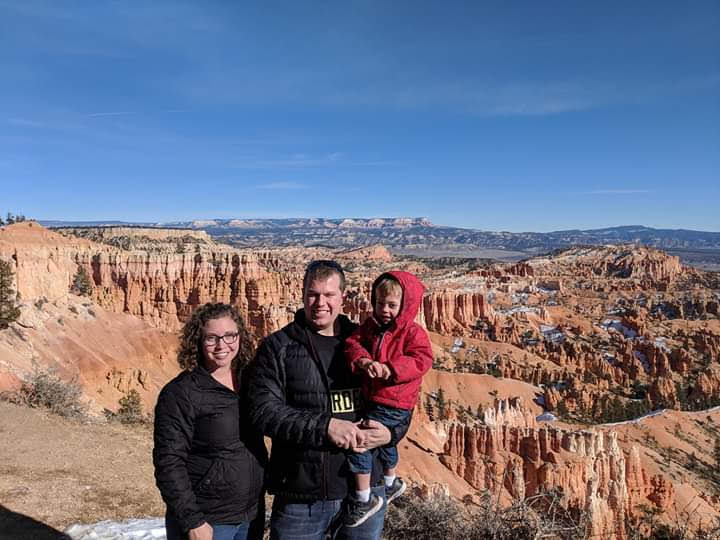
How Motherhood Changed My Ambition
By May Anderson, PE • June 24, 2026First Written 2018. Updated 2026 My whole life I knew I wanted to be a career woman. As a child when I was asked, “What do you want to be when you grow up?” Many of my friends responded enthusiastically, “A MOM!” I however, never understood this. I always wanted to be a career woman…. -

Introducing My Whole World
By May Anderson, PE • June 24, 2026My whole world is my family. They give my life purpose, meaning, and direction. For much of my life, I was ambitious because I tied my worth to productivity. I chased accomplishments, checked boxes, and measured success by what I could achieve. Over time, that changed. Today, my ambition is fueled by something different. I… -

What I hope to build
By May Anderson, PE • June 23, 2026Several years ago, I started a project called My Intentional Life. At the time, I was overwhelmed, juggling work, family, responsibilities, and a growing realization that life wasn’t slowing down. I kept asking myself a simple question: Am I building my life intentionally, or am I just reacting to whatever comes next? Shortly after pondering…
Still curious? That’s the point. See you in my notebook 🙂